
Saqqara, Dahshur and Memphis: Discover the Birthplace of the Egyptian Pyramids
Saqqara, Dahshur and Memphis: Discover the Birthplace of the Egyptian Pyramids
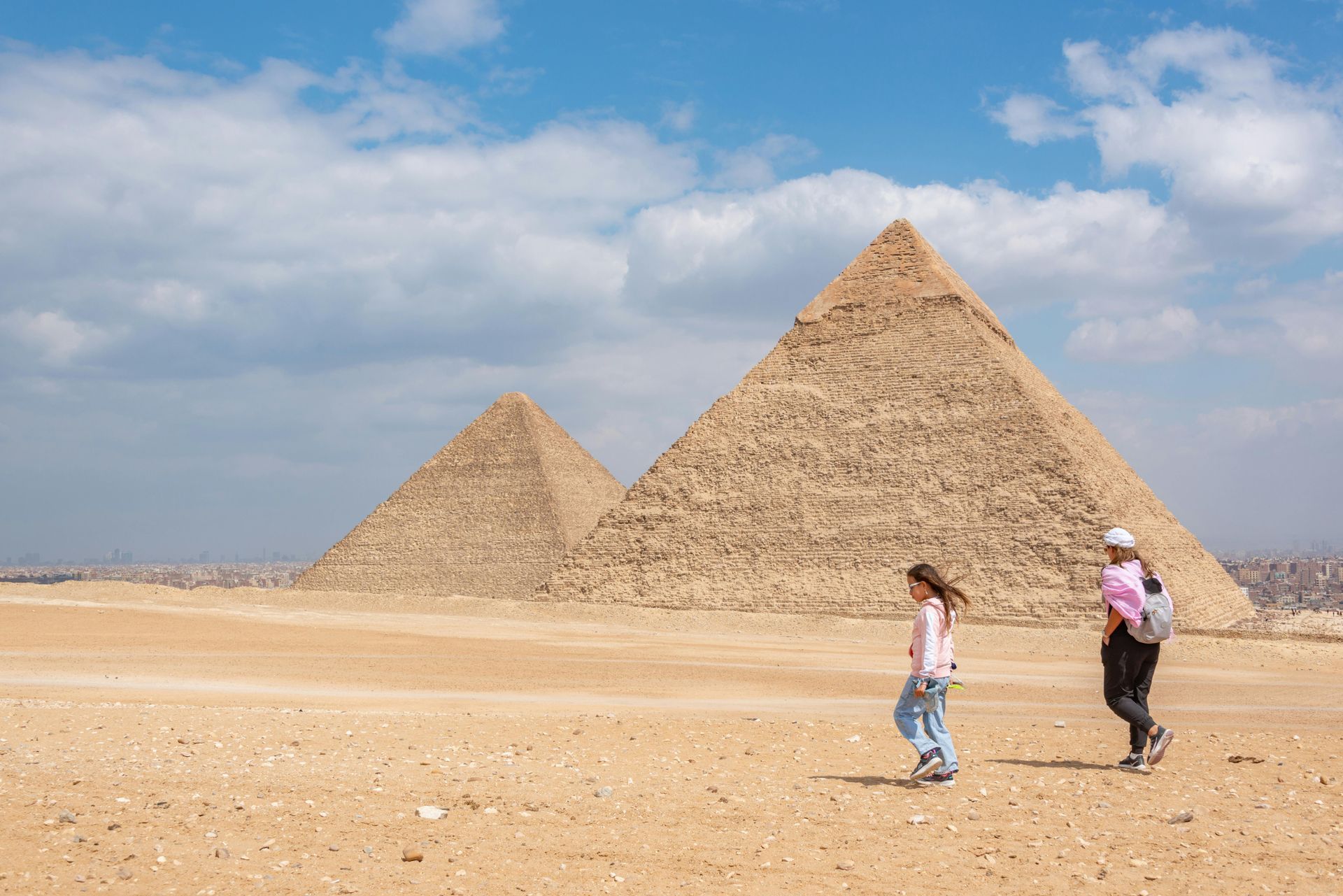
When most travelers think of the pyramids of Egypt, the famous pyramids of Giza usually come to mind first. The Great Pyramid, the Great Sphinx, and the dramatic desert plateau have become symbols of ancient Egyptian civilization recognized across the world.
However, the true story of pyramid construction began earlier and farther south of Giza. Just a short drive from Cairo lies one of the most historically important regions in the history of ancient Egypt. This area includes the ancient capital of Memphis and the vast archaeological landscapes of Saqqara and Dahshur.
Together, these three locations form the heart of the ancient Memphite Necropolis, a region where Egyptian kings, nobles, and priests were buried for more than two thousand years. Here, ancient architects experimented with new construction techniques that eventually led to the development of the great pyramids.
Together, these three locations form the heart of the ancient
Memphite Necropolis, a region where Egyptian kings, nobles, and priests were buried for more than two thousand years. Here, ancient architects experimented with new construction techniques that eventually led to the development of the great pyramids.
Exploring Memphis, Saqqara, and Dahshur allows travelers to witness the complete evolution of pyramid design—from the earliest step pyramids to the first successful smooth-sided pyramids.
For anyone interested in ancient history, archaeology, or the engineering genius of the Egyptians, this region offers one of the most fascinating journeys into the past.
Memphis: The First Capital of Ancient Egypt
The journey through the ancient pyramid fields often begins at Memphis, the first capital of unified Egypt.
Founded around 3100 BC by King Menes, Memphis served as the political and administrative center of Egypt for many centuries. The city was strategically located near the Nile River, allowing rulers to control both Upper and Lower Egypt while managing trade routes across the region.
During the Old Kingdom period, Memphis became the center of royal power and the headquarters of the pharaohs who built the earliest pyramids.
Although most of the ancient city has disappeared over time, the Memphis archaeological site still contains several remarkable remains that give visitors a glimpse into the grandeur of the once-powerful capital.
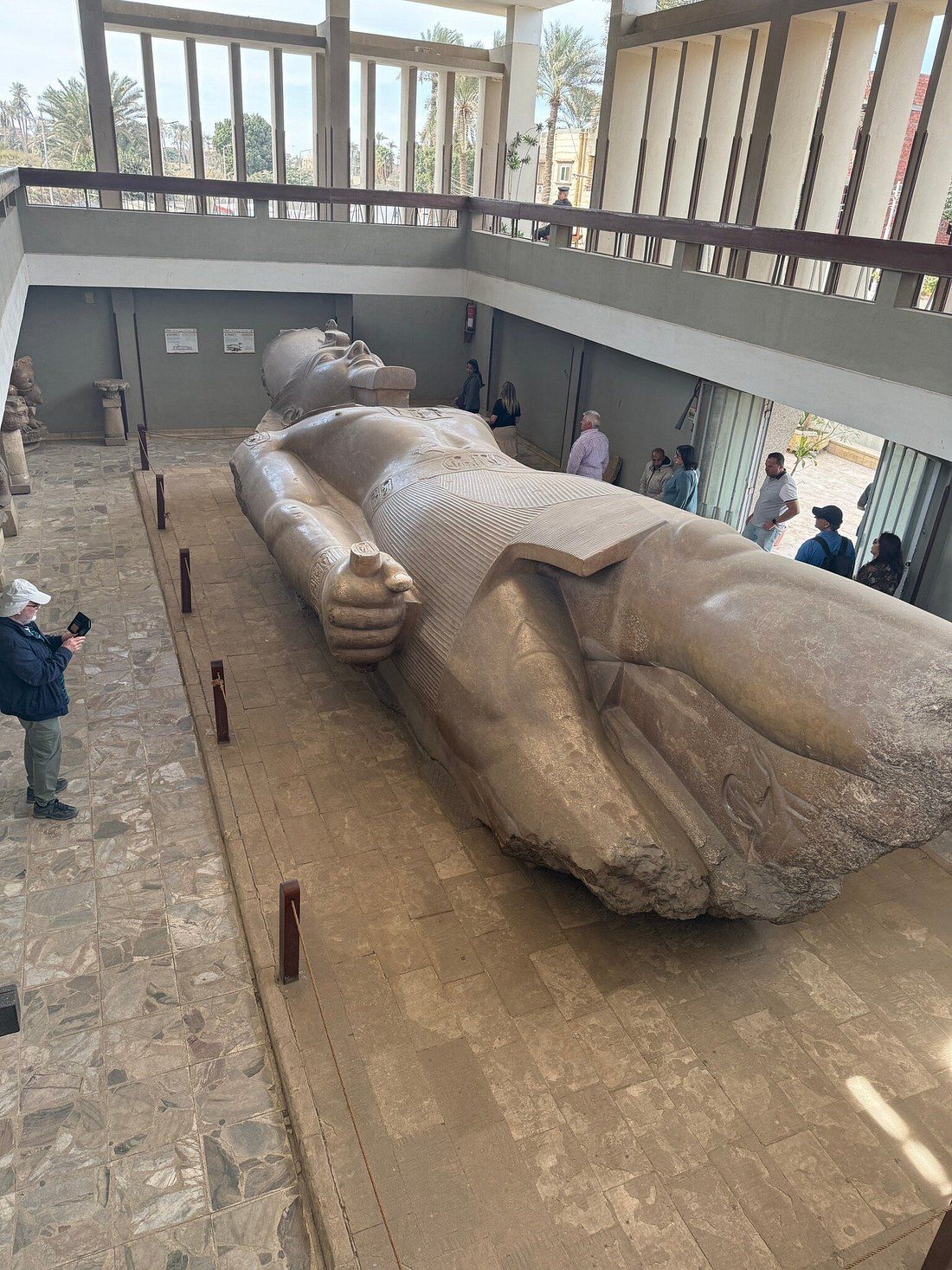
One of the most impressive monuments found at the site is the enormous statue of Pharaoh Ramesses II. This colossal limestone statue measures more than 10 meters in length and represents the great pharaoh lying in a museum hall built to protect it.
Another fascinating monument is the alabaster Sphinx of Memphis, a beautifully carved statue that demonstrates the skill of ancient Egyptian sculptors.
Walking through the ruins of Memphis allows visitors to imagine what life might have been like in one of the most influential cities of the ancient world.
From Memphis, travelers continue south to the pyramid fields where the kings of Egypt built their eternal resting places.
Saqqara: Home of the First Pyramid in History
Just a short distance from Memphis lies Saqqara, one of the most important archaeological sites in Egypt.
Saqqara served as the main cemetery for the ancient capital of Memphis and was used as a burial ground for thousands of years. The vast desert plateau is filled with pyramids, tombs, temples, and underground burial chambers that tell the story of ancient Egyptian civilization across many dynasties.
The most famous monument at Saqqara is the Step Pyramid of Pharaoh Djoser.
Built around the 27th century BC during the Third Dynasty, the Step Pyramid is widely considered the first pyramid ever constructed. Before this time, Egyptian rulers were buried in rectangular tombs known as mastabas. The architect Imhotep revolutionized Egyptian architecture by stacking several mastabas on top of each other, creating the distinctive stepped structure that rises above the desert.
The Step Pyramid complex was an enormous architectural achievement. It was the first large-scale building project constructed entirely from stone, and it established the concept of pyramids as royal tombs that would dominate Egyptian architecture for centuries.
The pyramid stands at approximately 60 meters tall and is surrounded by an enormous ceremonial complex that includes temples, courtyards, and shrines used for royal rituals.
Beneath the pyramid lies a vast underground network of tunnels and chambers that protected the burial chamber of the king.
Visitors exploring Saqqara today can walk through parts of this ancient complex and witness the incredible beginnings of pyramid construction.
But Saqqara is much more than just the Step Pyramid.
The necropolis contains more than a dozen pyramids from later dynasties, including the Pyramid of Teti and the Pyramid of Unas. The Pyramid of Unas is particularly famous because it contains the earliest known pyramid texts—religious inscriptions carved into the walls of the burial chambers to guide the king safely into the afterlife.
Saqqara also contains numerous tombs belonging to high officials, priests, and nobles who served the pharaohs. Many of these tombs are decorated with detailed carvings that depict scenes of everyday life in ancient Egypt, including farming, fishing, music, and religious ceremonies.
These beautifully preserved reliefs provide valuable insight into the culture and society of the ancient Egyptians.
Exploring Saqqara feels like stepping into a vast open-air museum that covers thousands of years of Egyptian history.
Dahshur: The Experimental Pyramid Field
Continuing farther south from Saqqara, travelers arrive at Dahshur, another remarkable pyramid field that played a critical role in the development of pyramid architecture.
Dahshur is famous for two unique pyramids built by Pharaoh Sneferu, the founder of the Fourth Dynasty and father of King Khufu, who later built the Great Pyramid of Giza.
These pyramids represent important experiments in pyramid construction and helped engineers perfect the techniques that would later be used at Giza.
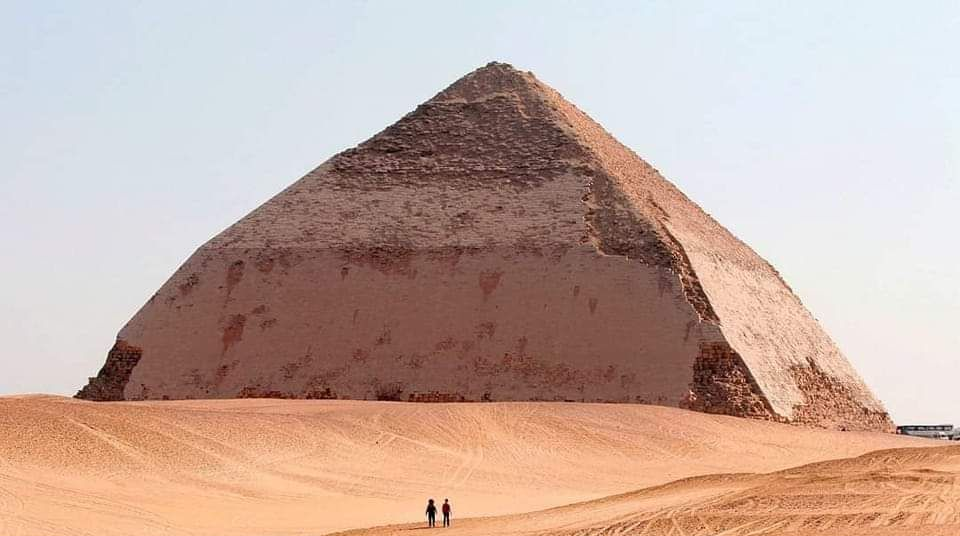
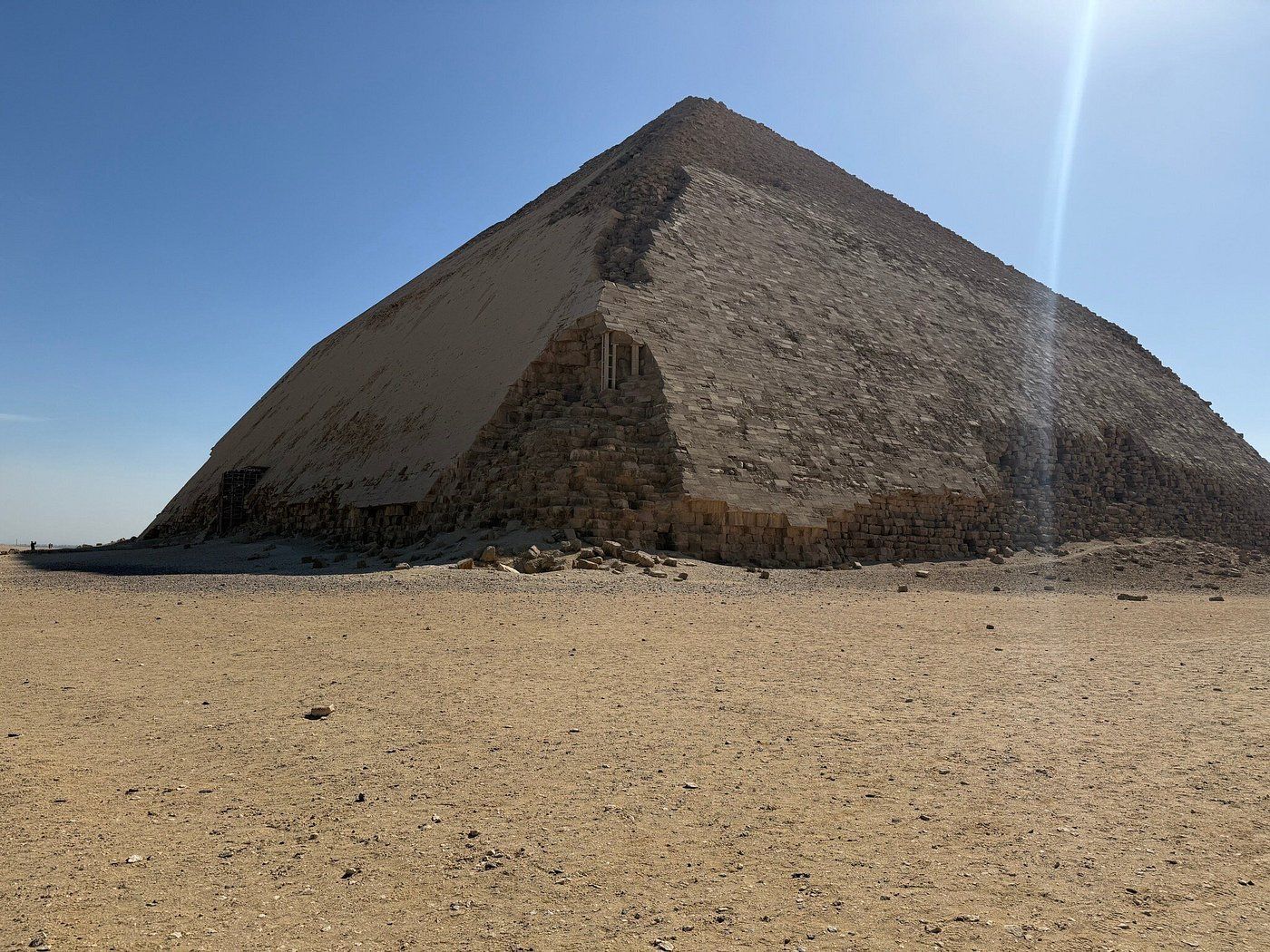
The first monument visitors encounter is the Bent Pyramid.
This pyramid has a distinctive shape that makes it one of the most unusual pyramids in Egypt. The lower section of the pyramid rises at a steep angle, but halfway up the structure the angle suddenly changes, giving the pyramid its characteristic bent appearance.
Historians believe the original design may have been too steep, which could have caused structural instability. To prevent collapse, the builders adjusted the angle during construction, resulting in the unique shape that we see today.
Despite this unusual form, the Bent Pyramid is one of the best-preserved pyramids in Egypt and still retains much of its original smooth limestone casing.
Visitors can even enter the pyramid and explore the internal chambers, which remain largely intact.
A short distance away stands the Red Pyramid, another pyramid built by Sneferu.
The Red Pyramid represents the final stage in the development of pyramid construction before the great pyramids of Giza were built. It is considered the first successful smooth-sided pyramid, making it a major milestone in ancient Egyptian architecture.
The pyramid gets its name from the reddish limestone blocks used in its construction. At approximately 105 meters tall, it is the third-largest pyramid in Egypt.
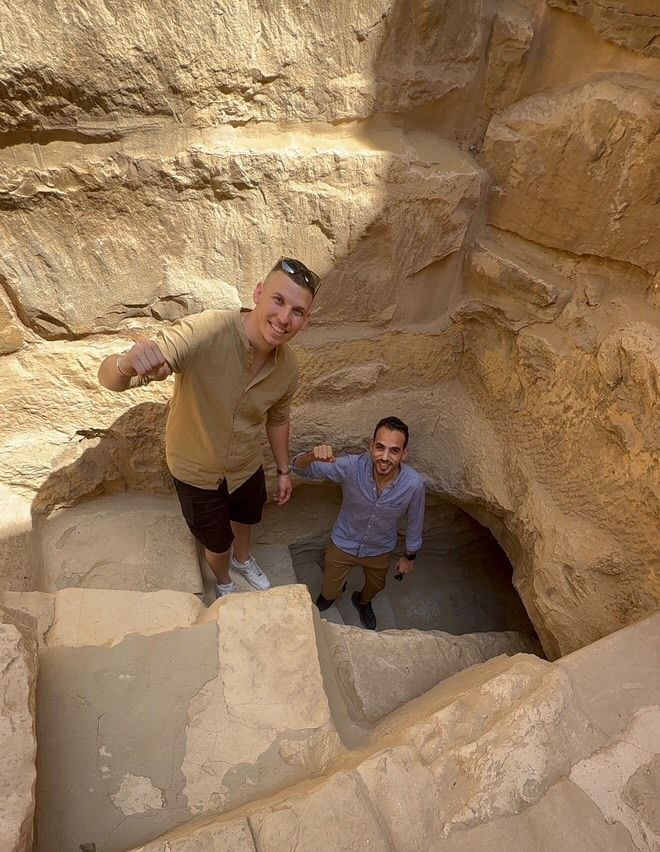
One of the highlights of visiting the Red Pyramid is the opportunity to enter the structure. Visitors climb through a long descending passage that leads deep inside the pyramid to a series of impressive burial chambers.
Standing inside these enormous chambers gives visitors a powerful sense of the scale and engineering skill of ancient Egyptian builders.
Why Visit Saqqara, Dahshur and Memphis
While the pyramids of Giza attract millions of visitors every year, Saqqara, Dahshur, and Memphis offer a quieter and more immersive historical experience.
These sites allow travelers to explore the origins of pyramid construction and understand how ancient Egyptian engineers gradually perfected their designs.
Several factors make these sites particularly appealing for visitors.
First, they are far less crowded than the Giza Plateau, allowing travelers to explore at a relaxed pace.
Second, they offer access to pyramids that visitors can still enter, such as the Red Pyramid.
Third, the archaeological landscapes are vast and visually impressive, with desert scenery stretching across the horizon.
Most importantly, these sites reveal the story of how ancient Egyptian architecture evolved from simple tombs into the monumental pyramids that remain standing today.
What to Expect on a Saqqara, Dahshur and Memphis Tour
A typical tour of this historic region begins with hotel pickup in Cairo or Giza.
The first stop is usually Memphis, where visitors explore the open-air museum and see the colossal statue of Ramesses II and the alabaster Sphinx.
Next, the tour continues to Saqqara, where travelers visit the Step Pyramid of Djoser and explore the surrounding archaeological complex.
Finally, the journey continues south to Dahshur, where visitors can see the Bent Pyramid and enter the Red Pyramid.
The entire experience usually takes around five to six hours and offers an incredible overview of Egypt’s earliest pyramids.
A Journey Through the Evolution of the Pyramid
Visiting Memphis, Saqqara, and Dahshur is like traveling through the history of pyramid construction.
At Memphis, travelers
discover the ancient capital
where the pharaohs ruled.
At Saqqara, they see the first pyramid ever built.
At Dahshur, they witness the architectural experiments that eventually led to the perfect
pyramids of Giza.
Together, these sites reveal the incredible creativity, ambition, and engineering skill of the ancient Egyptians.
A Journey Through the Evolution of the Pyramid
Visitors looking for adventure can also try ourAbusir Horseback Riding Adventure
through the desert pyramids.
After exploring the early pyramids at Saqqara and Dahshur, many travelers continue to the
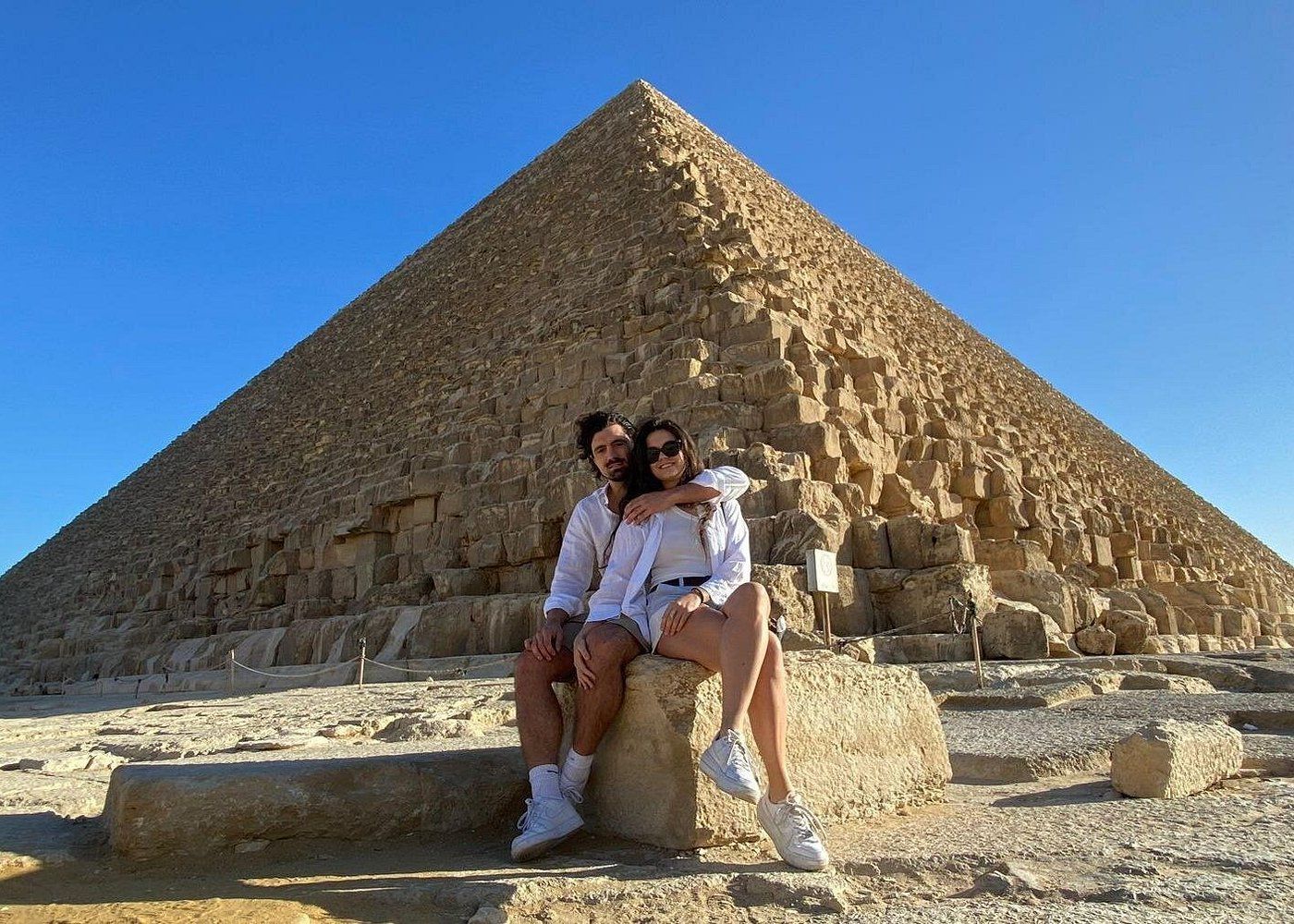
Great Pyramid of Khufu at Giza, the largest pyramid ever built.
A perfect way to complete your journey through ancient Egyptian history is by visiting the
Grand Egyptian Museum near the Giza Plateau.
Frequently Asked Questions
How far are Saqqara and Dahshur from Cairo?
Saqqara is located about 30 kilometers south of Cairo, while Dahshur is approximately 40 kilometers south of the city. Both sites can easily be visited on a half-day tour from Cairo or Giza.
Can visitors enter the pyramids at Dahshur?
Yes. Visitors can enter the Red Pyramid and explore its interior passageways and burial chambers. The Bent Pyramid is also occasionally open for entry depending on site conditions.
How old is the Step Pyramid of Djoser?
The Step Pyramid was built around 2667–2648 BC during the Third Dynasty of ancient Egypt, making it more than 4,600 years old.
Why is the Bent Pyramid shaped differently?
The Bent Pyramid changed angle during construction, likely because the original design was too steep and could have caused the structure to collapse. The builders adjusted the angle to stabilize the pyramid.
Is Memphis worth visiting?
Yes. Memphis was the first capital of ancient Egypt and provides important historical context for understanding the nearby pyramid fields of Saqqara and Dahshur.
Can Saqqara and Dahshur be visited in the same day?
Yes. These sites are located close to each other and are commonly combined in one tour along with Memphis.
Which pyramids can you enter near Cairo?
Visitors can enter several pyramids near Cairo including the Red Pyramid in Dahshur, the Bent Pyramid, and sometimes pyramids in Saqqara depending on restoration work.
Let's Start Planning
Send us your travel dates, interests, and questions, and we'll help create the perfect Egypt experience for you.